Corporate Gifts
Cheap Corporate Gifts That Don't Feel Cheap
Part of our Corporate Gifts guide →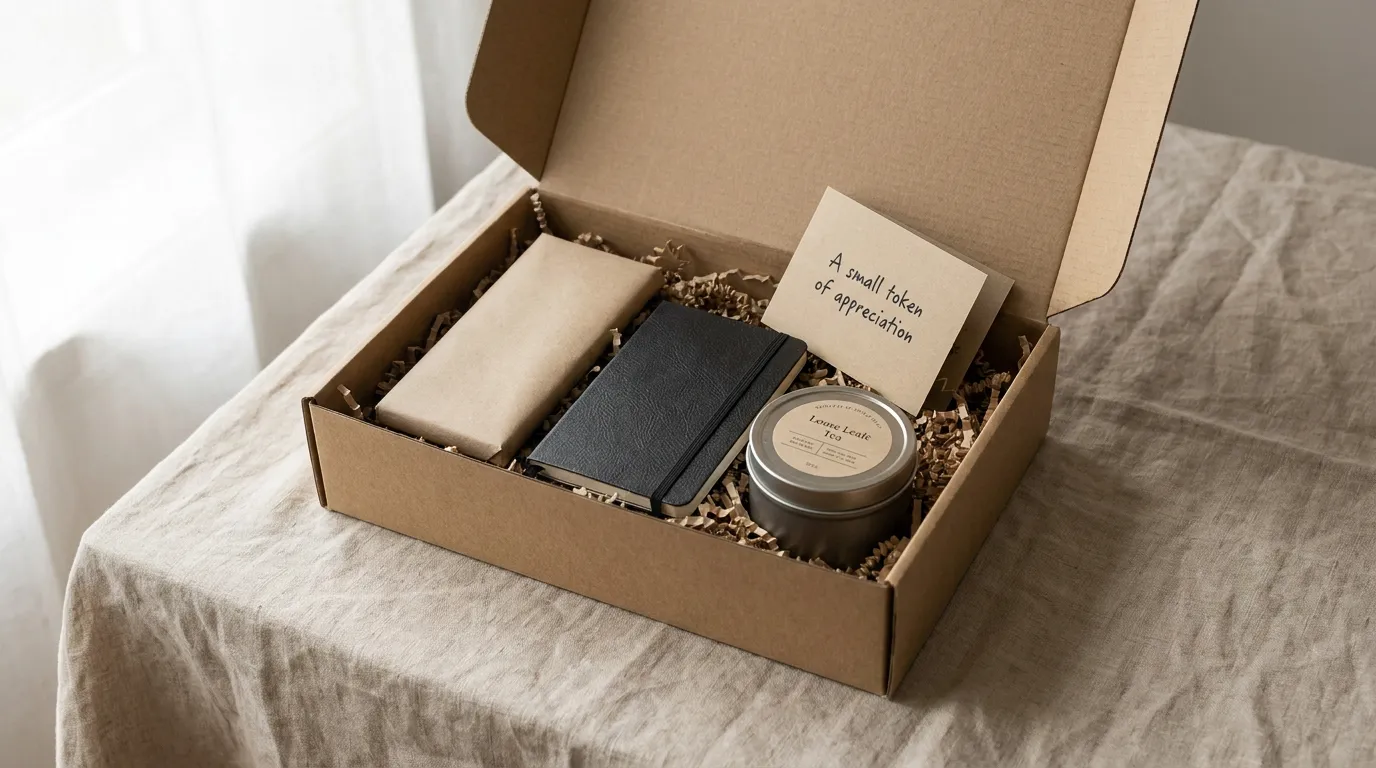
Cheap corporate gifts are exactly what they sound like: presents for staff or clients on a small per-head budget, usually somewhere between £5 and £20. Done well, they can feel every bit as considered as gifts costing far more, because recipients judge what lands in their hands, not what it cost you. The difference between cheap-and-smart and cheap-and-nasty is where the money goes. Spend it on one decent item, tidy packaging and a human note, and skip the layer most buyers never see: the agency markup. This guide covers what makes a budget gift feel premium, ideas that work from £5 to £20 per head, the honest economics behind the price, and how to stretch a fixed number across a whole team.
Can cheap corporate gifts still feel good?
Yes, as long as the money goes where recipients actually look. Nobody opens a gift and checks the invoice. They notice how the item feels in the hand, whether the box opens nicely, and whether someone bothered to write a note that sounds like a person. All three of those are achievable on a small budget; none of them depends on a big one. What sinks cheap corporate gifts is not the low spend, it is low effort: a random trinket, a plastic sleeve, a logo where a thought should be. The fix is to be honest about the number you have and design around it. One good thing, presented well, with a line of genuine thanks, reads as considered. Recipients remember the feeling of being thought about, and that feeling costs far less than most buyers assume. The rest of this guide is about engineering it deliberately.
What makes a budget gift feel premium?
Concentration. Spread £15 across three items and each one feels like a token; put the same £15 into one well-made thing and it feels like a choice. That is the single most useful rule in budget gifting. The second is that presentation does a surprising share of the work for a surprisingly small share of the cost. A tidy kraft box, paper shred instead of plastic filler, and a printed or handwritten card cost pennies per unit, yet they are the first things a recipient touches. Then there is the note itself, which is free and carries more meaning than anything in the box. Name the reason for the gift in one human sentence and you have done what most expensive gifts forget to do. Material matters too: ceramic over thin plastic, cotton over crinkly polyester, a pen with some weight to it. Premium is a set of cues, not a price point.
Budget gift ideas that actually work
At the £5 to £8 end, good treats are hard to beat: a proper bar of chocolate, shortbread, a small tin of biscuits or a quality hot chocolate sachet, boxed nicely with a card. Food is enjoyed and remembered, and nobody resents receiving it. Between £8 and £12, useful small items earn their keep: a ceramic mug with a quiet mark, a bamboo notebook, a decent pen, cosy socks, or a candle for a warmer occasion. From £12 to £20 you can pair things: a mug with hot chocolate and biscuits, a notebook with a pen and a treat, or a tote with a couple of snacks inside. The pattern across all three bands is the same: items people would happily choose for themselves, in one tidy box. With 200+ products to draw from, ready-made or fully bespoke, we can build any of these to the number you give us.
Where does the gift money actually go?
Five places, and only four of them add value. The product itself is the obvious one. Branding setup is the second: printing or embossing a logo has a fixed cost that shrinks per unit as quantity rises. Packaging is the third, and the box, the filler and the card are cheap individually but real at scale. Fulfilment is the fourth: packing, storing and shipping, especially to individual home addresses. The fifth is the one most buyers never see: the agency markup, a margin added to every item by a middle layer that did none of the making. That layer is why two identical-looking gifts can carry very different invoices. We source worldwide on a best-value basis and handle design, storage and shipping in house, so the markup never enters the price. That is the honest mechanics behind cheap corporate gifts that do not look it: spend on the four layers that matter and delete the fifth.
Mistakes that make gifts look cheap
Most budget gifts fail on the same four points, and every one of them is avoidable. The first is flimsy material: a pen that feels hollow, a tote that crinkles, a notebook with see-through pages. Choose fewer, better items instead; weight and texture are what hands judge. The second is the giant logo. A print that covers half the item turns a gift into advertising, while a small, quiet mark lets people actually use the thing. The third is packaging that fights you: shiny plastic sleeves, bubble wrap, items rattling loose in an oversized box. A simple kraft box with paper filler costs little and reads as deliberate. The fourth is sending no note at all, which makes even a decent item feel like a mailshot. None of these mistakes saves meaningful money. They are habits, not economies, and dropping them is the fastest free upgrade an inexpensive gift can get.
How do you stretch a fixed budget across a team?
Order once, brand lightly, and let the logistics work for you rather than against you. One production run brings the per-head cost down and keeps every box consistent, which matters when colleagues compare. Light branding helps twice over: a single small mark costs less to apply than a multi-position print, and it makes the gift more likely to be used. Design does not need to cost anything either; our in-house team handles it free and sends mockups within 24 hours, so you can sign off without paying a studio. Then use storage as a budget tool. We hold your boxes free for up to three months, so you can produce one efficient batch for several occasions, a welcome here, a thank-you there, and ship as each moment arrives. Everything goes out in recyclable packaging, to one office or to individual home addresses worldwide. A fixed budget goes further when nothing is wasted on rush, repeat runs or middlemen.