Sustainable
Eco-Friendly Company Swag Ideas That Get Kept
Part of our Smart Corporate Gifting guide →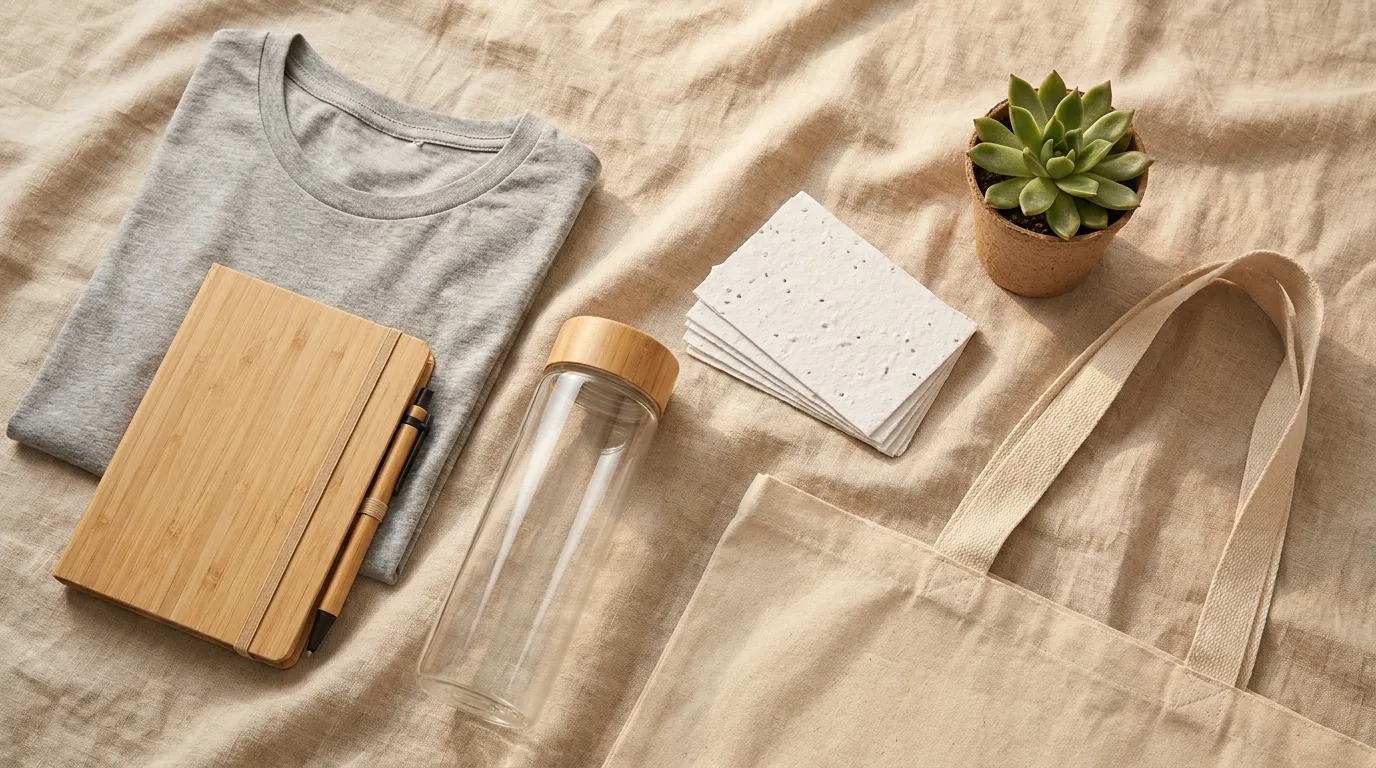
Good eco friendly company swag ideas share one trait with good-value swag: they get used and kept, not binned. That is the whole game, because the biggest problem with swag has never been the logo, it has been the waste. Choose items people genuinely reach for, made from materials that hold up, and you remove the landfill problem at the root while still getting your name into someone's daily life. If a lighter footprint is a goal for your team, eco materials and recyclable packaging slot in easily as an option. Below are ideas organised by category, plus the practical bits that decide whether swag is actually green or just painted that way: packaging, greenwashing, sourcing well, and branding it without undoing the good. No prices, just what works.
What actually makes swag eco-friendly?
Eco-friendly is an easy phrase to slap on a product and a harder one to earn, so it helps to know what to look for. Three things matter most. First, longevity: an item built to be used for years beats a disposable one, full stop, because the greenest swag is the swag that never needs replacing. Second, materials, which is where organic cotton, recycled stainless steel, bamboo and recycled plastics quietly do their work in place of cheap virgin polyester. Third, the full journey, since packaging, shipping and end-of-life all count, not just the object. A recycled bottle wrapped in plastic film is not really a green choice. The honest test is whether the item would still be in use a year later. If it ends up in a drawer or a bin, no material claim on the label can save it from being waste with your logo on. Usefulness and durability are what make swag both better value and lower waste.
Drinkware, apparel, desk, tech and treats: ideas by category
Most great swag falls into five buckets. Drinkware is the workhorse: insulated stainless steel bottles, reusable coffee cups and flasks that travel everywhere and replace single-use plastic dozens of times a week. Apparel works when the fit and feel are right, so think cotton t-shirts, recycled-fibre hoodies and caps people actually want to wear. Desk and stationery covers bamboo notebooks, recycled-paper journals, refillable pens and sturdy totes, all low-key and hard to get wrong. Tech accessories like cork-backed mouse mats, recycled cable tidies and solar power banks earn daily use. Treats add instant warmth: good chocolate, coffee or tea from quality roasters. The strongest packs mix two or three of these rather than betting everything on one item, because a bottle, a notebook and a treat will suit far more people than a hundred identical pens. Where eco matters to you, choose the recycled or organic version of each.
Does sustainable packaging really matter?
It matters more than most people expect, because packaging is both the first thing a recipient touches and one of the easiest places for waste to sneak back in. You can choose the greenest bottle on earth and undo it with a plastic clamshell, polystyrene chips and shrink wrap. So treat the box as part of the gift, not an afterthought. Recycled, recyclable kraft, paper tape, shredded paper void fill and printed inks rather than plastic laminates keep the whole thing honest from the outside in. There is an experience upside too, since tidy, natural packaging signals care the moment a box is opened, well before anyone reads a single branded item. We build boxes in recyclable packaging as standard, so the unboxing feels considered and the bin afterwards stays nearly empty. It is a small detail that quietly tells the recipient the whole thing was thought through.
How do you avoid greenwashing your swag?
Greenwashing is when green-sounding language outruns the actual substance, and swag is full of it. The fixes are practical. Be specific rather than vague: organic cotton certified to a recognised standard says more than a leaf icon and the word eco. Look for real certifications where they apply, such as GOTS for organic textiles, FSC for paper and wood, or recycled-content standards, because a named certification is a checkable claim, not a vibe. Favour fewer, better items over a pile of cheap ones dressed up as eco, since volume is the enemy of low waste. And be honest in your own messaging; if one item in a box is recycled and the rest are not, do not call the whole thing eco. Recipients are sharper than they used to be, and an overclaim that gets noticed does more brand damage than no claim at all.
How do you choose swag that lasts?
The single biggest lever on both cost and footprint is choosing items people keep, so start there. A reusable bottle that replaces single-use plastic for years is worth more than a drawer of throwaway trinkets, and it costs less per use too. Pick a small number of genuinely useful things over a large pile of cheap ones: a quality bottle, a notebook people will fill, a treat that gets eaten. Mixing two or three useful items suits more people than betting everything on a single product, and it keeps the whole kit out of the bin. If you want to lean further into a lower footprint, choose the recycled or organic version of each item and keep the packaging recyclable. The result is swag that feels considered, gets used, and represents your brand for far longer than the usual giveaway. That is the same instinct that drives good value: spend on what lasts, not on what gets thrown away.
How do you brand swag without undoing the good?
Branding is a dial, not a switch, and on quality swag a light touch usually wins twice over. Aesthetically, a small embossed or single-colour mark lets a good item look good first and on-brand second, which is exactly what makes people keep and use it. Practically, restrained branding also tends to be the lower-impact choice, since heavy plastic-based prints and lacquers can compromise an otherwise recyclable product. So lean towards methods that suit natural materials: debossing on leather and cork, subtle screen prints on cotton, engraving on metal and bamboo. The goal is a finish that feels considered rather than plastered on. We design the branding in house and send free mockups within 24 hours, so you can see exactly how a quiet, tasteful mark sits on each item before anything is produced, and adjust it until it looks like a gift rather than an advert.